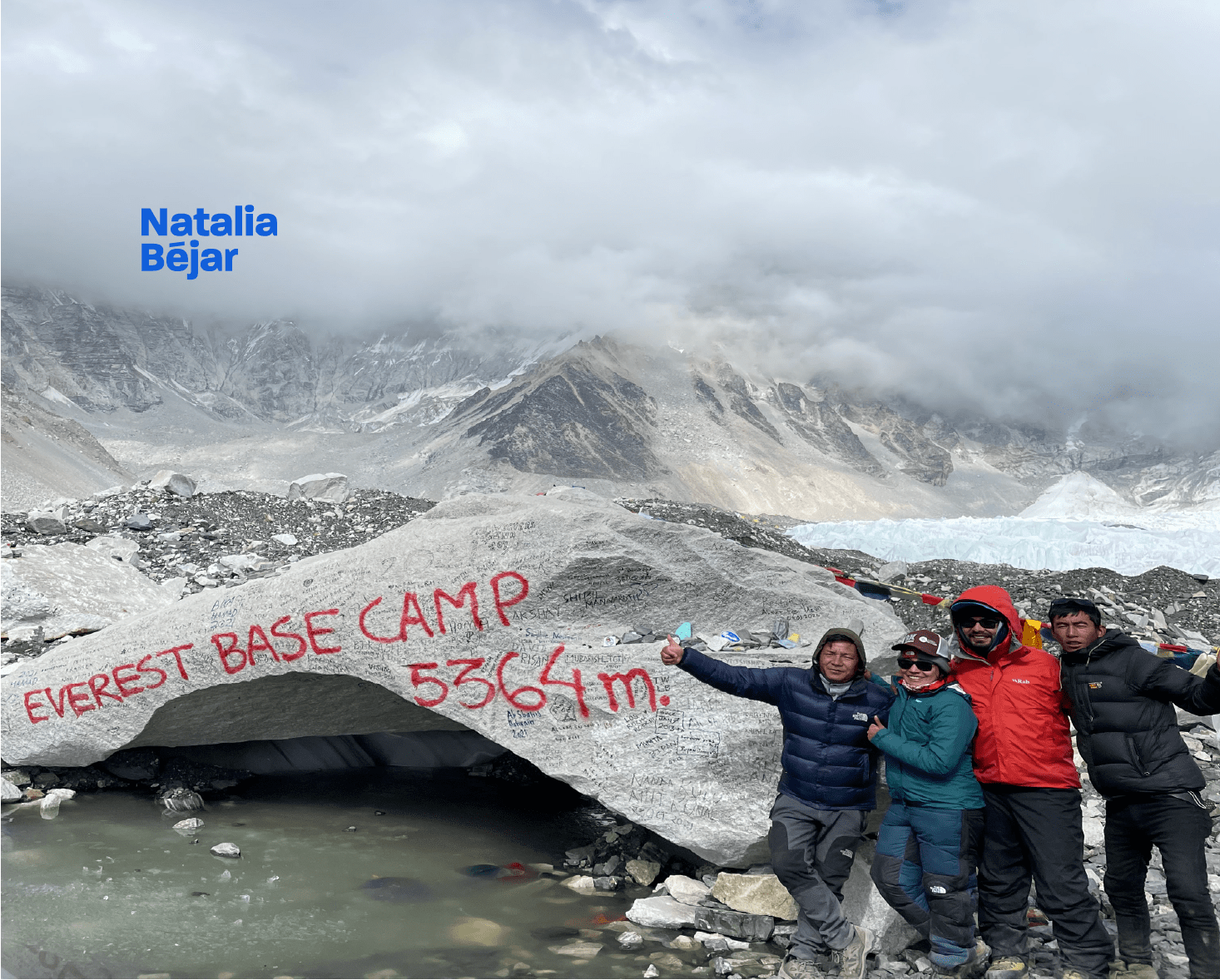
When we planned our honeymoon, my husband and I knew that a mountain destination was what we wanted, after researching various routes we decided to visit Mount Everest in Nepal. We read many blogs and talked with friends who had visited Nepal, however, living the experience of 13 days of trekking to the Everest Base Camp (EBC) at 5,364 masl gave us a series of lessons learned that I want to share with you:
Lesson #1: Enjoying the road requires preparation
Before trekking, it is necessary to prepare yourself to be able to enjoy the path with responsibility and respect for the mountains and for oneself. We take each trek very seriously and this one consisted of 13 days going up and down 1000m height differences. daily, walking between 4 and 7 hours each day.
There are many myths related to the mountain, for example: it is not necessary to prepare when it is just a walk, anyone with good physical condition can go, it is cheap, a guide is not necessary, etc. However, responsible mountaineering demands more and our preparation has been carried out for years in the following aspects:
- Physical training: The Mountaineering school, Zenda, offers a specialized physical training course for mountaineering where a specialized trainer prepares us every other day and controls our performance on a monthly basis. The results are excellent, even if you practice another sport, your performance will improve.
- Technical training: At Zenda, they offer basic, intermediate and advanced mountaineering courses to be able to be independent in the mountains and learn about topics such as: putting together a backpack correctly, moving on rough terrain, rappelling systems, rope-in, self-arrest, etc.
- Acclimatization: During the trek to the EBC we would be at heights from 2,000 to more than 5,000 masl Our trip was in March and the mountain season in Peru begins in April (between December and March going to the mountains in Peru is dangerous and the recommendation is not to go very high). However, we knew that we had to go to altitude to acclimatize our body and for more than two months we went every weekend to San Mateo to go to viewpoints near the city (between 2,000 and 4,000 meters above sea level). Said departures were with established times to avoid the hours of rain and the dangers of being out of season. Previously, in previous years we had already been above 5,000 meters above sea level and we knew our body and head at those altitudes.
- Food: Knowing that we have to go to high altitudes, we avoid foods that we already know affect us. For example: excess fat. In particular, I consulted a sports nutritionist before the trip to improve my eating habits. In addition, during acclimatization I verified that chewing gums "Energy Chews" (source of easily digestible carbohydrate for energy) worked well for me.
- Muscular unloading: Exercise and acclimatization require muscular effort and I consider it important to unload with a Physiotherapy specialist. They are a little painful but extremely important to improve performance, avoid contractures and injuries.
We have learned to practice this sport responsibly thanks to the Mountaineering school: Zenda, you can enter their website here to learn more.

Lesson #2: Three days trip to Nepal from Peru can be fun and not exhausting
Getting to Kathmandu, the capital of Nepal, where the 8K Expeditions agency picked us up, took us around 3 days with stops in Panama and Turkey. Although it is a long trip and we did not have many days off, it worked for us:
- I believe that tourism is important to activate the economy. In our case, we visited several places on our stopovers, where they told us that the tourism industry has been hit hard by COVID-19, greatly reducing the number of tourists compared to the number prior to the pandemic. Remember that you must review the health regulations of each country, which are constantly changing, to avoid problems when entering.
- Sleeping on the plane prevented us from getting jet lag and we were able to stay refreshed on each layover.
- If they have a Priority Pass or Dinners Club card, they can enter VIP lounges in almost every country in the world with access to Wi-Fi, food, laundry, showers, etc., allowing them to save money.
- Buying travel insurance that covers you even for sports above 5,000 meters above sea level is highly recommended. In my case I used medical assistance on a scale.
Lesson #3: The mountain team depends on each person, but…
Although it is not necessary to use equipment such as harness, crampons, helmet or ice axe, it is necessary to go with three layers of clothing because at the beginning it is hot, but then the wind and cold are quite strong (for reference, we went in a good season in March). For this trip, personally, my three layers of clothing that keep me comfortable at 5,000 meters above sea level in Peru were not enough for the cold of the Himalayas. Each person has a different tolerance to cold and prior acclimatization helped us get to know each other in that regard. However, it was convenient for us to find an official store of northface in Kathmandu with good prices where we were able to purchase ideal clothing for this trek and where they can also equip themselves for higher altitude expeditions.
In addition, in my opinion it is necessary to have good trekking shoes, an ergonomic backpack and poles. Recommending because the return involves descending up to 1,500 meters daily, approximately. Also, in EBC there are very slippery parts of the road where we saw other tourists fall abruptly.

Lesson #4: It is important to take care of your diet during the trek
You have to consider that water, food, electricity, hot showers and everything in general increases in price as altitude increases.
During the Everest Base Camp trek, most of the locals ate Dal Bhat for lunch and dinner, a typical Nepalese dish. In my case, it was great because I could request it without spicy and it was delicious.
In addition, I read in many blogs that it is not recommended to eat meat because it might not be fresh, which can be done without problems since there is a variety to choose from (if you are a vegetarian, you will not have any problem with the meals).

On the other hand, prior to the trip we knew the countries where we would be. I particularly have a low tolerance for new foods in my diet that could make me have a bad time on the trip, therefore, prior to the trip we looked for Turkish and Nepalese food restaurants in Lima (Peru) to find out if I did not have any digestive problems in front of thereto. I was super useful to have a better stay.
Lesson #5: We all have an impact that affects future generations
Our ancestors preserved beautiful landscapes that we can enjoy today and hopefully future generations can also see it as we do.
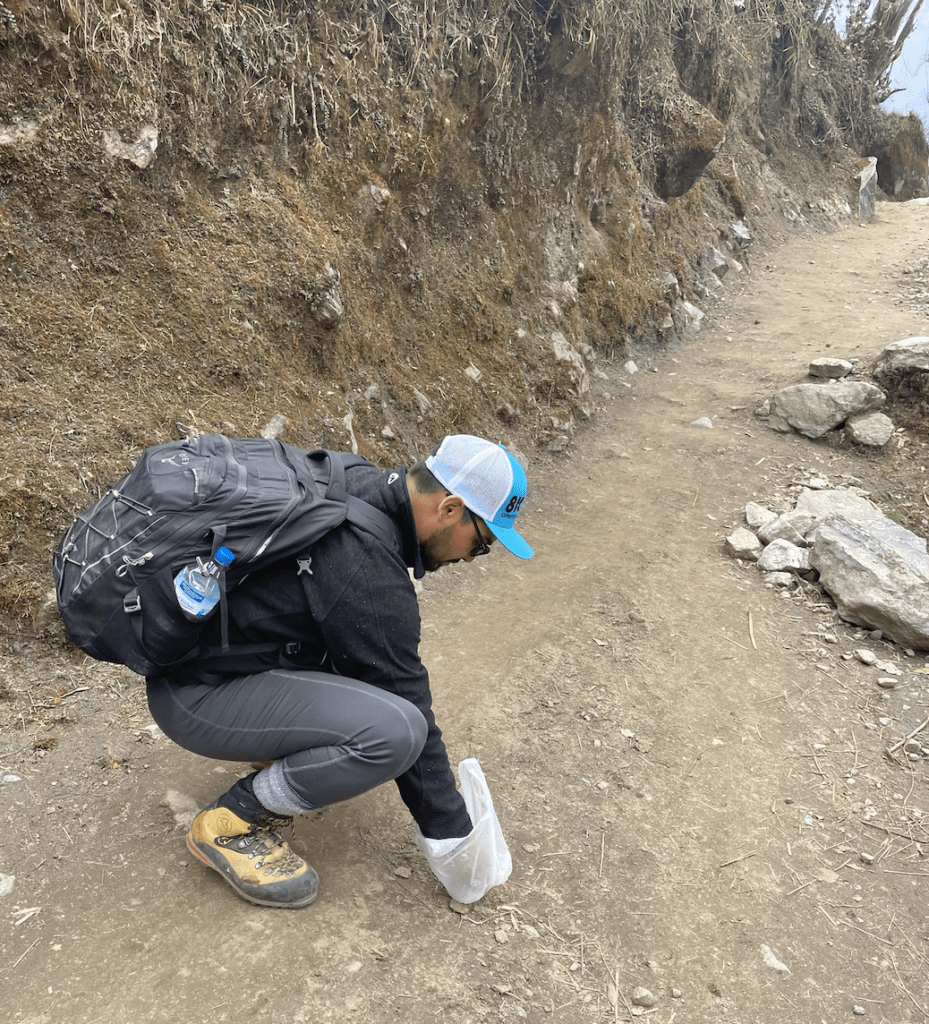
It is no longer an option and it is mandatory that we do not leave waste or allow other people to do so. Throughout the trek to Everest Base Camp you will find many deposits for waste which makes it easy to keep it clean. However, we saw in some areas a lot of waste, we cleaned 4 kilometers and collected more than 50 cigarette butts and more than 100 food wrappers, mainly.
Our commitment is not only with the environment, we also seek to preserve socio-cultural areas of the surroundings near the mountains with our project ""Preservando"”. For this reason, we donated more than 60 pieces of warm clothing to the Sherpa family of Seduwa (Nepal), collected with the support of friends and family. The donations were delivered with the support of our friends from the Nepalese agency 8K Expeditions.

Bonus: Links to websites and contacts I recommend:
- 8K Expeditions: Excellent agency that provided us with guidance, porter and comfort from our arrival in Nepal. His kindness and professionalism delighted me.
- Zenda: Mountain School where we have been preparing ourselves physically and technically for years.
- Web to know the restrictive measures of entry to each country
- Specialist in Sports Physiotherapy: Telephone here.
- Sports Nutritionist: Telephone here.
- Travel insurance with coverage for sports over 5,000 meters above sea level: Telephone here and mail in this link.
If you want to share more information about Everest Base Camp, write it in the comments
Manuel Ferdinand
April 19, 2022 - 10:14pm
I'm your fan Natalia!!!
the most
Natalie
May 02, 2022 - 3:04pm
Thank you Manu!